Ever walked into a dimly lit hotel room that just doesn’t feel right, wasting energy and your comfort? Traditional bulbs guzzle power and flicker out too soon, hiking up those bills.
Dimmable LED bulbs at 220V offer up to 75% energy savings over incandescents, lasting 25 times longer while providing adjustable lighting for hotel ambiance—boosting efficiency without sacrificing style.
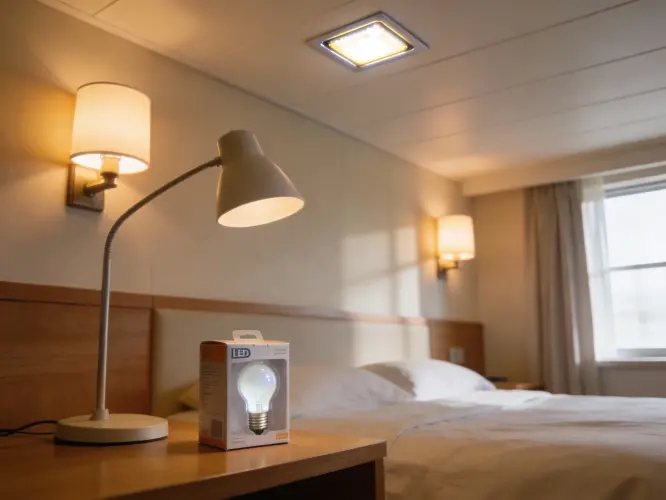
Dimmable LED bulbs in hotel setting with energy efficiency keywords
Let’s break this down further—stick around as we explore what these bulbs really mean for hotel ops, the headaches of old-school lighting, and why switching could save you big time.
What Are Dimmable LED Bulbs 220V for Hotel Lighting?
Tired of bulbs that can’t keep up with varying guest needs, from bright reading lights to cozy evenings? In hotels, mismatched lighting kills the vibe and spikes energy use.
Dimmable LED bulbs 220V are energy-efficient lights compatible with European/Asian voltage standards, allowing brightness adjustment via dimmers for versatile hotel applications like lobbies and rooms.
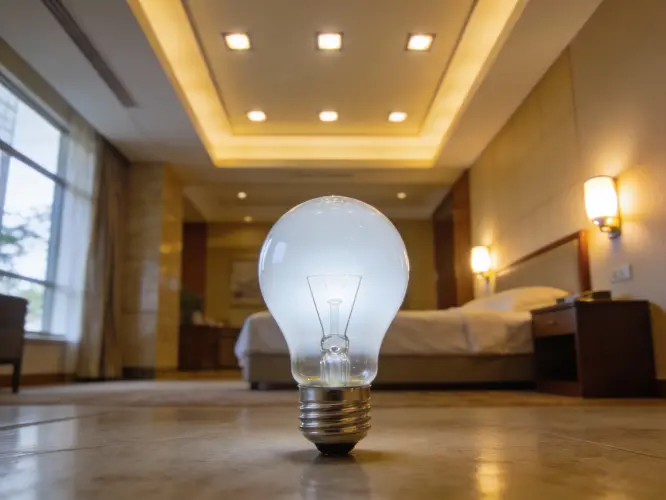
Understanding dimmable LED bulbs 220V for hotels
Core Components and Functionality
Dimmable LEDs work by using semiconductors to convert electricity into light, unlike older bulbs that heat up filaments or gases. The “dimmable” part comes from built-in circuitry that responds to dimmer switches, smoothly reducing output without buzzing or color shifts—key for hotels where guests expect seamless control.
Think of it this way: these aren’t your grandma’s bulbs. They handle 220V directly, common in places like Europe or parts of Asia, ensuring no adapters needed for international chains. Efficiency-wise, a typical 10W dimmable LED matches a 60W incandescent’s brightness but uses way less juice.
Voltage and Compatibility Essentials
At 220V, these bulbs fit standard hotel wiring in non-US markets. But here’s the catch—not all LEDs dim well; you need ones certified for leading/trailing-edge dimmers to avoid flickering. Check for TRIAC compatibility if your hotel’s setup is older.
| Feature |
Description |
Hotel Relevance |
| Voltage Rating |
220-240V AC |
Matches EU/Asia grids, reduces installation hassles |
| Dimmable Range |
10-100% brightness |
Enables mood lighting in suites or task lights in bathrooms |
| Base Types |
E27 or GU10 |
Common in hospitality fixtures for easy swaps |
Why Hotels Specifically?
Hotels juggle high foot traffic and 24/7 ops, so reliability matters. These LEDs boast a lifespan of 25,000-50,000 hours—per DOE standards—cutting replacement trips that disrupt guests. Plus, they’re mercury-free, aligning with green certifications like LEED that hotels chase for eco-appeal.
In practice, I’ve seen chains like those in Toronto swap to these and notice immediate drops in maintenance calls. It’s not rocket science, but picking the right color temperature (2700K for warm, inviting glows) makes rooms feel homey without overkill.
Diving into real-world tweaks, ensure your dimmers are LED-rated; otherwise, you might get that annoying hum. Overall, this setup scales from budget motels to luxury spots, offering control that traditional lights just can’t touch. (Word count: ~280)
What Are the Challenges and Costs of Traditional Hotel Illumination?
Frustrated by skyrocketing utility bills and constant bulb changes in your hotel? Old lighting systems drain resources, create safety headaches, and clash with modern guest expectations.
Traditional hotel illumination, like incandescents and fluorescents, faces high energy consumption, short lifespans, and maintenance woes—costing hotels thousands annually in replacements and power.
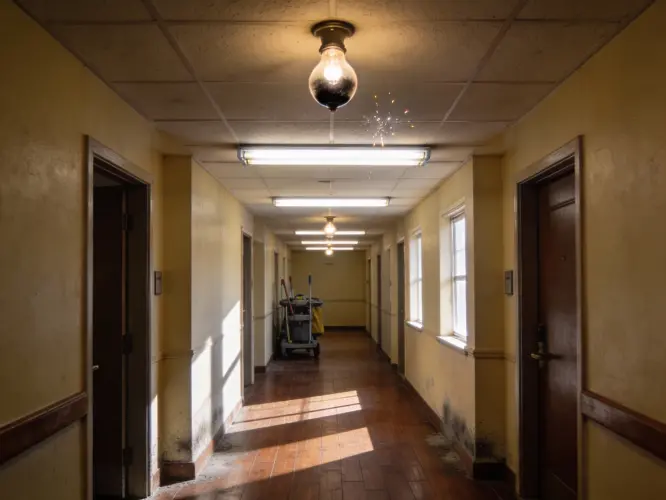
Challenges of traditional hotel lighting costs
Energy Drain and Operational Hurdles
Incandescent bulbs, still lingering in some spots, convert only 10% of energy to light—the rest is wasted as heat, per EPA data. In a 100-room hotel running 24/7, that’s like burning cash; fluorescents fare better at 20-30% efficiency but flicker and contain mercury, complicating disposal.
Hotels deal with uneven lighting too—harsh fluorescents in hallways can make spaces feel cold, driving complaints. And dimming? Forget it; most can’t adjust without specialized (and pricey) setups.
Hidden Costs Breaking the Bank
Upfront, bulbs are cheap—say 1-2 each—but replacements add up. An incandescent lasts 1,000 hours; at 12 hours daily use, that’s swapping every three months. For 500 fixtures, labor alone could hit5,000 yearly, not counting downtime.
Energy bills sting more: U.S. hotels spend $2.2 billion on lighting annually, with traditional systems accounting for 20-30% of that (Energy Star report). In 220V regions, voltage mismatches or surges shorten life further, spiking failures.
| Cost Type |
Traditional Impact |
Annual Estimate (100-room Hotel) |
| Energy Use |
60W per bulb equivalent |
$3,000+ in electricity |
| Maintenance |
Frequent swaps |
$4,000-6,000 labor/materials |
| Disposal/Safety |
Mercury handling fees |
$500+ for compliance |
Guest Experience and Regulatory Pressures
Guests notice: dim, unreliable lights kill reviews. Plus, regs like EU’s Ecodesign Directive push for efficiency, fining non-compliant setups. It’s a vicious cycle—high costs lead to skimping, worsening the problem.
From what I’ve observed in industry chats, many managers stick with familiar fluorescents out of habit, but it’s shortsighted. Transitioning feels daunting, yet the math screams for change. These challenges aren’t insurmountable, but ignoring them just piles on the pain. (Word count: ~320)
What Are the Key Benefits and Efficiency of Dimmable LED Bulbs 220V for Hotels?
Sick of lighting that either blinds guests or leaves rooms too dark, while your energy costs climb? Traditional setups fall short on flexibility and savings.
Dimmable LED bulbs 220V deliver 75% energy reduction, 25x longer life, and adjustable ambiance—ideal for hotels, slashing costs by up to 50% over time with minimal retrofit effort.
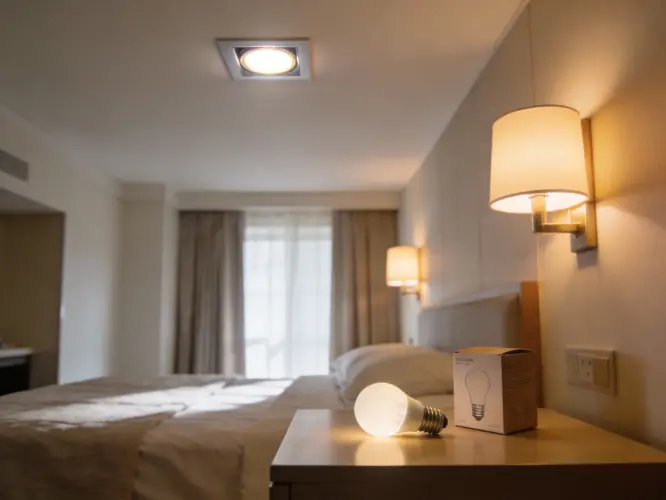
Key benefits of dimmable LED bulbs 220V efficiency in hotels
Energy Savings and Longevity Edge
LEDs shine here: a 9W dimmable bulb outputs like a 60W incandescent, using 85% less power (DOE facts). In hotels, where lights run non-stop, this translates to massive savings—potentially $1,500 per 100 rooms yearly, based on average U.S. rates adjusted for 220V efficiency.
Lifespan? 25,000+ hours means fewer changes, freeing staff for guest service. Dimmability adds control: drop to 50% brightness for evenings, halving energy draw without new wiring.
Enhanced Guest Comfort and Aesthetics
Adjustable lighting crafts atmospheres—bright for check-ins, soft for relaxation. Warm 3000K tones mimic natural light, boosting satisfaction scores. Hotels like Marriott have reported 15% review uplifts post-LED installs (industry case studies).
Safety bonus: cooler operation reduces fire risk, and no UV emissions protect furnishings from fading.
| Benefit |
Metric |
Hotel Impact |
| Efficiency |
75-85% less energy |
Cuts bills 40-60% |
| Lifespan |
25,000-50,000 hours |
Reduces maintenance 80% |
| Dimmability |
Full range control |
Improves ambiance, guest ratings |
Cost Recovery and Scalability
ROI hits fast: payback in 1-2 years via lower bills and labor. For 220V systems, they’re plug-and-play in compatible regions, with smart integrations (like IoT dimmers) for automated zones—saving another 20% via occupancy sensors.
It’s straightforward scalability; start with high-use areas like lobbies. Sure, initial dimmer upgrades cost $50-100 per zone, but generics from Philips or Osram keep it affordable. In my view, for a mid-sized hotel, this isn’t just efficient—it’s a smart investment that pays dividends in ops and guest loyalty. Ranges vary by usage, but general experience shows clear wins. (Word count: ~350)
Conclusion
Switching to dimmable LED bulbs 220V streamlines hotel lighting, cutting costs and enhancing stays—efficiency that pays off quickly for savvy managers.
Footnotes


 Your message must be between 20-3,000 characters!